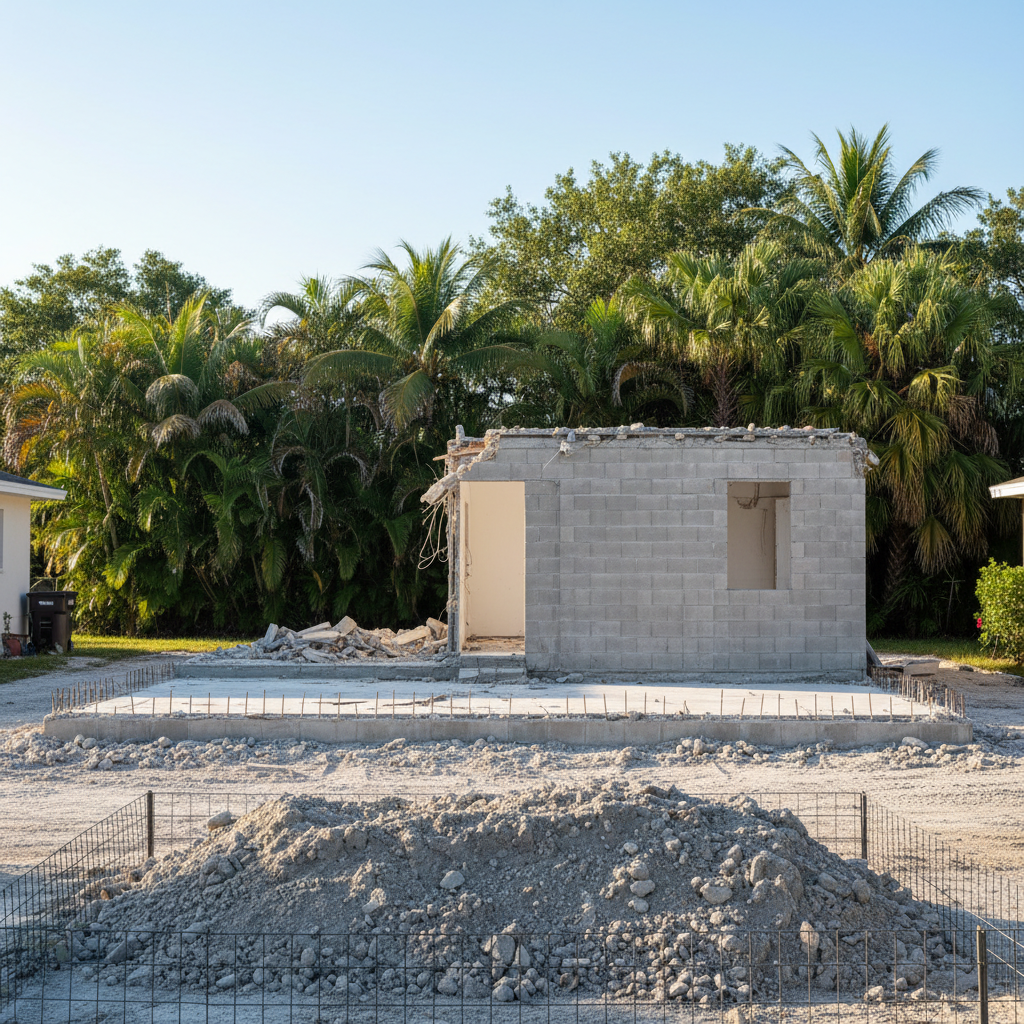
Alright, let's talk about partial demolition costs right here in Cape Coral. You're probably looking to renovate, add on, or just fix up a section of your place, and you need to know what kind of budget you're looking at. It's not as simple as a flat rate, but I can give you a solid idea of what influences the price and what you should expect.
What Even IS Partial Demolition?
When I say partial demolition, I'm talking about taking out specific parts of a structure, not the whole thing. This could be anything from removing an interior wall to gutting a bathroom, taking down a detached garage, or even just getting rid of a damaged lanai. It's precise work that needs careful planning so you don't mess up the rest of the building, you know?
Factors That Drive Up (or Down) the Cost
You want numbers, and I'll give 'em to you, but first, you gotta understand what makes those numbers move. Here's what we look at when we're putting together a quote:
- What's coming down? A non-load-bearing interior wall is way cheaper to remove than a load-bearing one that needs temporary shoring and structural modifications. A concrete block wall is harder to take out than drywall.
- Size and Volume: Bigger sections mean more labor, more debris, and more hauling. Simple as that.
- Materials: Are we dealing with old plaster, concrete, wood, or something else? Hazardous materials like asbestos or lead paint (common in older Cape Coral homes built before the 80s) will add significant costs for specialized handling and disposal. Don't skip this; it's a health and legal issue.
- Accessibility: Can we get equipment right up to the work area, or do we have to hand-carry everything through narrow doorways and hallways? Tight spaces mean more manual labor, which takes longer and costs more.
- Location within the structure: Taking out an exterior wall on the ground floor is different from removing a section of a second-story floor or roof. Working at height or in confined spaces always adds complexity and cost.
- Utilities: Are there electrical lines, plumbing pipes, or HVAC ducts running through the section you want gone? Licensed professionals need to safely disconnect and cap these off before demolition can even start.
- Debris Disposal: This is a big one. We've got to haul all that material away, and landfill fees aren't cheap. The volume and type of debris directly impact this cost.
- Permits: For most partial demolition jobs in Cape Coral, you'll need a permit from the city. This isn't usually a huge cost itself (often a few hundred dollars), but it means plans need to be drawn up and inspections might be required, which adds to the overall project timeline and administrative effort.
Typical Cost Ranges for Partial Demolition in Cape Coral
Okay, let's get to some actual figures. Keep in mind these are averages, and your specific job could be more or less. These numbers generally include labor, equipment, and debris removal, but usually NOT permit fees or specialized hazardous material abatement.
- Interior Non-Load-Bearing Wall Removal (10-15 linear feet): You're usually looking at something like $800 to $2,500. This is for drywall and studs, simple stuff.
- Interior Load-Bearing Wall Removal (10-15 linear feet): This jumps up significantly because of the structural work. Expect $3,000 to $8,000, or even more if extensive engineering and beam installation are needed.
- Bathroom Gut (fixtures out, down to studs): For an average-sized bathroom (50-70 sq ft), this could run you $1,500 to $4,000.
- Kitchen Gut (cabinets, counters, appliances out, down to studs): A typical kitchen (100-200 sq ft) might be $2,500 to $7,000. More complex kitchens with islands and extensive plumbing/electrical will be on the higher end.
- Detached Shed/Small Garage Demolition (up to 200 sq ft): For a basic structure, you might pay $2,000 to $5,000. Concrete slabs underneath will add to that.
- Concrete Patio/Slab Removal (100-200 sq ft, 4-6 inches thick): This can be $1,000 to $3,500, depending on access and reinforcement.
- Lanai/Screen Enclosure Demolition: For an average lanai, you're probably looking at $1,200 to $4,000, depending on size, materials (aluminum vs. concrete block), and whether the concrete slab needs to go too.
Remember, these are ballpark figures. Every job is unique.
What Should Be in Your Quote?
When you get a quote from a company like Primetime Demolition, make sure it's detailed. It should clearly outline:
- Scope of Work: Exactly what's being removed and what's staying.
- Labor Costs: How many crew members, estimated hours.
- Equipment Costs: Any specialized machinery needed.
- Debris Removal & Disposal: This should be itemized, including landfill fees.
- Site Cleanup: What level of cleanup they'll do after the demo.
- Permit Responsibility: Who is pulling the permit (usually the contractor).
- Insurance & Licensing: Confirmation they're properly insured and licensed.
- Timeline: Estimated start and completion dates.
- Exclusions: What's NOT included (e.g., utility disconnections, hazardous material abatement unless specifically quoted).
How to Avoid Overpaying
You don't want to get ripped off, and you shouldn't. Here's my advice:
- Get Multiple Quotes: Don't just go with the first guy. Get at least three detailed bids. This helps you compare apples to apples.
- Be Specific: The more clearly you can describe what you need done, the more accurate the quotes will be. Provide photos, drawings, or even mark out the areas.
- Check References & Reviews: A good contractor will have a solid reputation.
- Understand the Permit Process: Make sure the contractor is handling all necessary permits. Doing work without one can lead to fines and delays.
- Don't Rush: Plan ahead. Last-minute jobs often cost more because of scheduling difficulties.
- Ask About Hidden Costs: Specifically ask about potential extra charges for things like unexpected structural issues or hazardous materials.
Partial demolition can be a great way to transform your Cape Coral property without starting from scratch. Just make sure you do your homework, get clear quotes, and work with a reputable company. It'll save you headaches and money in the long run.